
The Search for a New Italian State
M: Son of the CenturyThis flow traces the argument that the liberal state has failed and Mussolini’s effort to replace it with centralized fascist authority.
increasing Bearing strength in each event
 decreasing
Bearing strength in each eventdecreasingThe State Appears Absent

Authority Erodes
Crisis across Institutions
Strikes, occupations, mutinies, and street violence expose a government unable or unwilling to command events consistently. Prefects and police often hesitate while armed movements act.
A Claim to Replace the State
Fascists describe their movement as the force that can restore order. The claim draws power from real institutional weakness while concealing the movement’s role in intensifying the crisis.
The Nation over Classes
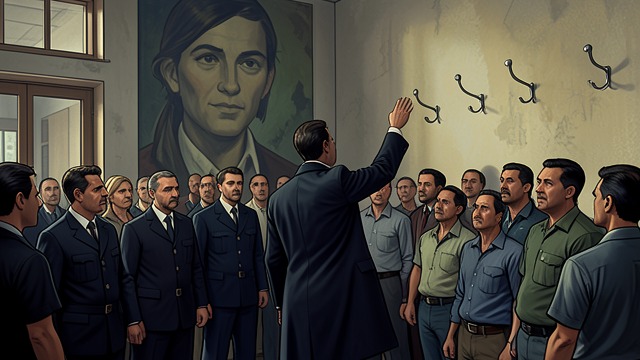
A Third Political Identity
Beyond Bourgeoisie and Proletariat
Mussolini presents Italy as a nation that cannot be reduced to class conflict. Fascism claims to represent a national whole while preparing to discipline both workers and political opponents.
Inclusion through Subordination
The language of unity promises to overcome division, but it places authority in a single leader and a hierarchy. A nation becomes a state only by narrowing who may act in its name.
The Parliamentary Warning
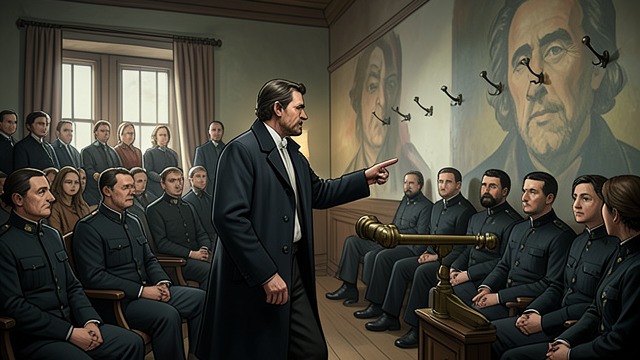
A Government Threatens Its Chamber
The Inaugural Speech
Mussolini tells parliament that his appearance is a formal courtesy and reminds deputies that he could dissolve the chamber. He also invokes the armed blackshirts who could occupy it.
Consent under Pressure
The deputies grant confidence and full powers despite the speech’s open contempt for their institution. Parliament continues to exist but increasingly as a body whose authority depends on the government it is supposed to supervise.
The Militia Enters the State
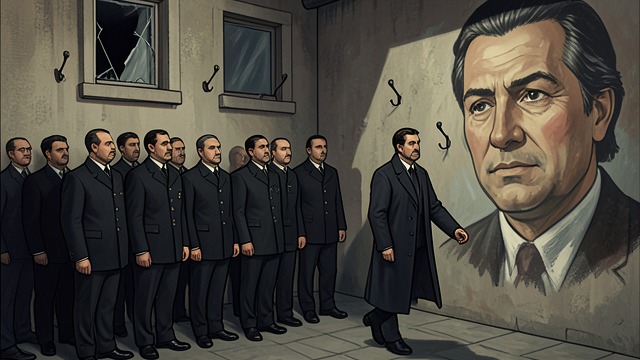
Legalizing Partisan Force
A Parallel Armed Body
The government establishes a national militia from fascist formations. The organization is meant to absorb local squads and place them under central command.
State and Party Converge
The new force serves the regime while retaining a distinct party identity and loyalty to Mussolini. The boundary between state authority and fascist organization becomes increasingly indistinct.
The State Is Mussolini

Central Power Expands
Law and Administration
Mussolini uses decree-making, electoral reform, censorship, and appointments to increase executive control. The language of national restoration accompanies a steady reduction of institutional independence.
One Leader’s Claim
The regime treats opposition as an attack on the nation rather than a legitimate political position. The state’s claimed unity becomes inseparable from the leader’s authority.
1920–1922
1921–1922
November 16, 1922
December 1922–January 1923
1923–1924
